
Why Singapore Has Become the Go-To Destination for the Modern Career Traveller
Not so long ago, a business trip was exactly that - a trip taken for business. You flew in, attended the meetings, flew out. The city beyond the hotel lobby and the conference room was largely incidental. A nice view, perhaps, if you were lucky with the room allocation. Rarely a destination in its own right.
That model has been quietly dismantled. A new kind of professional traveller has emerged - one who arrives with a full schedule of work commitments and an equally deliberate plan for everything outside them. They are extending stays by two or three days. They are booking guided food tours on Thursday evenings and heritage walks on Saturday mornings. They are, in short, treating the destination as something worth experiencing, not just something worth visiting.
And increasingly, the destination they are choosing is Singapore.
The Numbers Behind the Shift
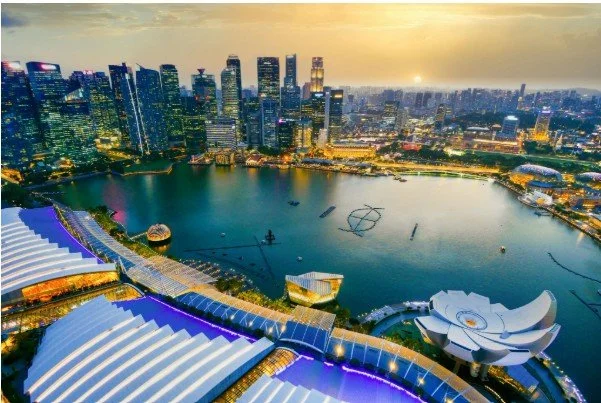
The trend has a name - bleisure travel, the blending of business and leisure - and the data behind it has become impossible to ignore. A 2024 survey by the Global Business Travel Association found that 65% of business travellers extended their work trips for personal leisure in the past year. That figure represents a fundamental shift in how professionals think about being away from home - and in what they expect from the cities they pass through.
Singapore is not merely participating in this trend. It is one of the key destinations driving it, with hotel occupancies rising by as much as 18% as business travel increasingly extends into leisure time. The city-state has, in a relatively short period, positioned itself as one of the most compelling places in the world to combine professional purpose with genuine cultural immersion - and the reasons for that are worth understanding.
A City Built for the Professionally Ambitious
Part of Singapore's appeal to the modern career traveller is structural. The city's infrastructure is world-class by any measure - reliable, efficient, and navigated with an ease that genuinely surprises first-time visitors. Getting from the financial district to a heritage neighbourhood, from a morning conference to an afternoon walking tour, requires neither a car nor a complicated itinerary. The city is compact enough to be explored seriously, and organised well enough that serious exploration is never logistically daunting.
The professional ecosystem reinforces this. According to the 2025 Global Financial Centres Index, Singapore ranked fourth globally and second in Asia in Business Environment - a reflection of the regulatory stability, rule of law, and commercial infrastructure that make it one of the most attractive locations in the world for international business. For professionals whose work involves the financial, technology, or professional services sectors, Singapore is not a peripheral destination. It is increasingly a central one.
That centrality draws a particular kind of visitor - ambitious, curious, often senior in their field - who has both the means and the motivation to make the most of time spent in the city. And that visitor, once they move beyond the standard business hotel and conference circuit, tends to find a city that rewards the investment handsomely.
The Upskilling Dimension
What sets the modern career traveller apart from previous generations of business visitors is not just the desire to explore. It is a broader orientation toward using time purposefully - toward returning from a trip with more than just completed meetings to show for it.
For a growing share of professionals, that means combining a work trip with structured learning. Singapore has become a regional hub for professional education in technology and AI, attracting professionals from across the Asia-Pacific who are making the journey specifically to invest in skills that their home markets may not yet offer at the same level of quality or accessibility.
This is the kind of visitor who books into a data analytics intensive or enrols in a short course before their flight home - who sees the trip as an opportunity to advance professionally in ways that go beyond the meeting room. For the career traveller looking to make that extra time count, providers like Heicoders Academy, a Singapore-based technology training provider specialising in AI and data analytics, offer structured, practical programmes in skills that are in high demand across the region and increasingly difficult to access at the same level of quality elsewhere in Asia-Pacific. The combination - professional development by day, cultural exploration in the margins - is precisely what the modern career traveller is looking for.
What Singapore Offers That Other Cities Cannot

The bleisure conversation tends to focus on infrastructure and logistics, but the most compelling reason professionals extend their stays in Singapore is cultural - and that is harder to replicate.
Singapore is, genuinely and unusually, several cities in one. The gleaming financial district and the low-rise shophouses of Chinatown occupy the same square kilometre. Kampong Glam's Arab Street sits minutes from the modern galleries of the Civic District. The hawker centre - one of Singapore's most distinctive cultural institutions, and one recognised by UNESCO for its significance - offers the best argument for staying longer that the city has to produce: food that is exceptional, democratic, and entirely unique to this place.
For the career traveller who wants to understand Singapore rather than simply pass through it, these layers reward guided exploration. The neighbourhoods tell a story about migration, trade, cultural coexistence, and rapid modernisation that no briefing document conveys. Walking them with a knowledgeable local guide turns a stopover into something genuinely educational - which, for this particular kind of professional, is precisely the point.
Making the Most of the Extended Stay
The professionals who get the most from an extended stay in Singapore are those who plan the margins as deliberately as they plan the meetings. A few days of genuine exploration - spread across the city's distinct districts, anchored by good food, guided by local knowledge - can transform the entire character of a work trip.
The practical advice from those who have done it consistently: resist the gravitational pull of the hotel vicinity. Singapore's most interesting experiences are distributed across the island, and each neighbourhood has its own distinct personality that a single afternoon in the central business district does not reveal. Chinatown's clan houses and heritage temples. The Peranakan architecture of Joo Chiat. The night markets and colonial buildings of Little India. The waterfront at Kampong Glam at dusk. These are not sights to be ticked off a list - they are contexts to be understood, and the difference between ticking and understanding is usually the presence of someone who knows the stories behind what you are looking at.
That is what a well-designed guided tour offers - not a narrated walk past landmarks, but an introduction to a place that makes subsequent solo exploration richer and more meaningful. For the career traveller who arrives in Singapore with two or three days to spare and a genuine curiosity about where they have landed, that introduction is the most valuable thing the city can offer.
The City That Justifies the Detour
Singapore has long been a stopover city - a place people passed through on the way to somewhere else, spending a night or two and moving on. What has changed is that a growing number of professionals are choosing to stop moving on quite so quickly.
The combination of world-class professional infrastructure, a compact and walkable city, a genuinely distinctive cultural landscape, and a growing ecosystem of structured learning opportunities has made Singapore a destination that rewards staying longer than the itinerary strictly requires.
The modern career traveller understands this. The flight home can wait another few days. There is more here than the meetings covered - and the professionals who take the time to find it tend to leave with considerably more than they arrived with.