
Singapore Walking Tour: A Journey Through Time
Singapore is one of those places that feels easy to admire but harder to fully understand—unless you slow down and let the city tell its story in its own way. This journey does exactly that. It’s not rushed, not overly structured, and not just a checklist of landmarks. Instead, it unfolds like a narrative, one chapter at a time—through a thoughtfully paced Singapore walking tour.
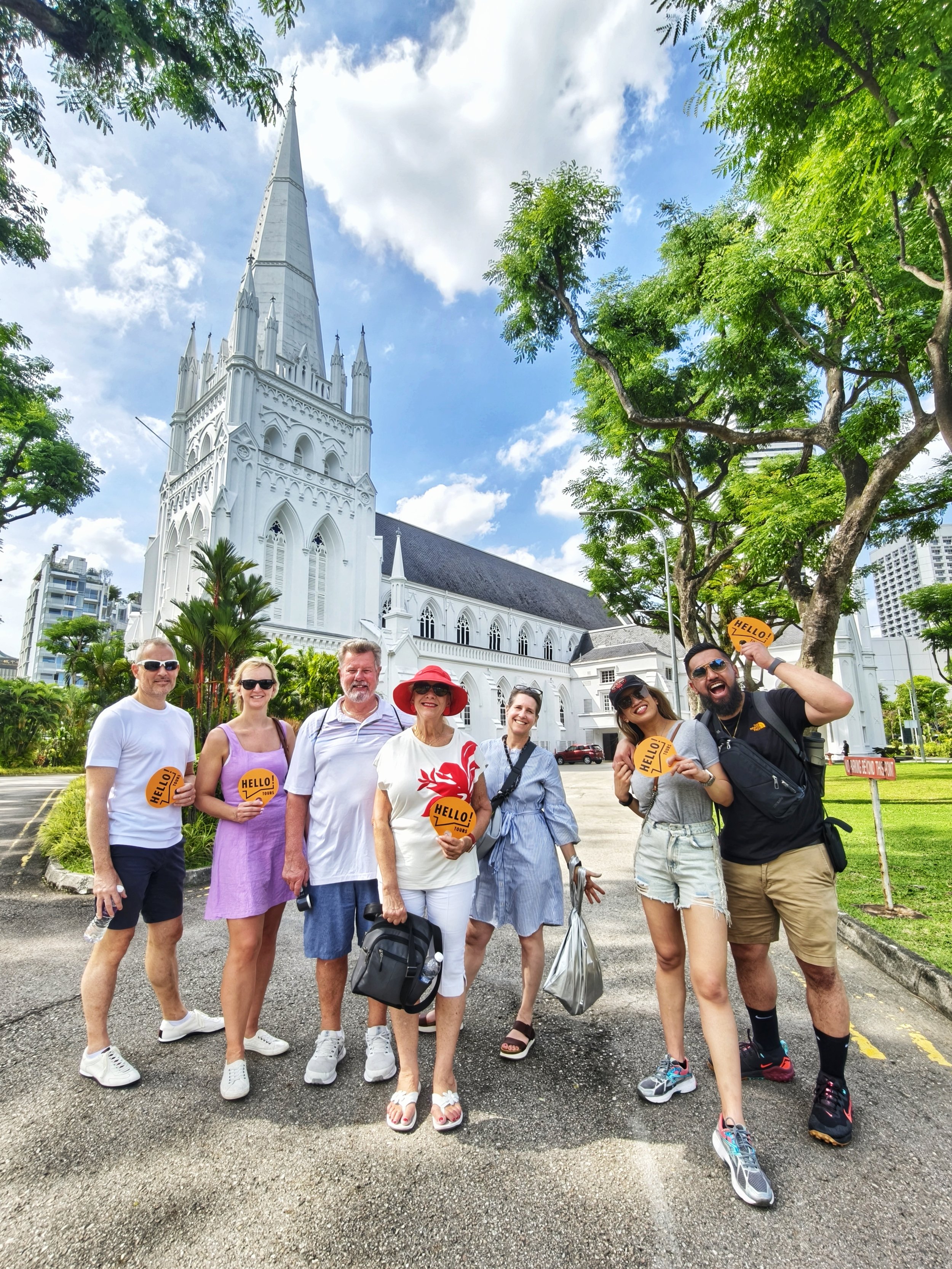
A group of smiling Hello! Singapore guests holding orange "Hello!" signs in front of the white Neo-Gothic St. Andrew's Cathedral in Singapore under a blue sky with green trees.
It begins in the Civic District, where the past still lingers quietly between grand colonial buildings and open lawns. Standing near places like Raffles Landing Site, you start to see how everything began—not as the global city we know today, but as a strategic trading post shaped by visionaries, merchants, and migrants. Figures like Stamford Raffles and Tan Tock Seng aren’t just names in history books here; their stories feel grounded in the spaces around you. It’s the kind of introduction that makes a Singapore history tour feel personal and real.
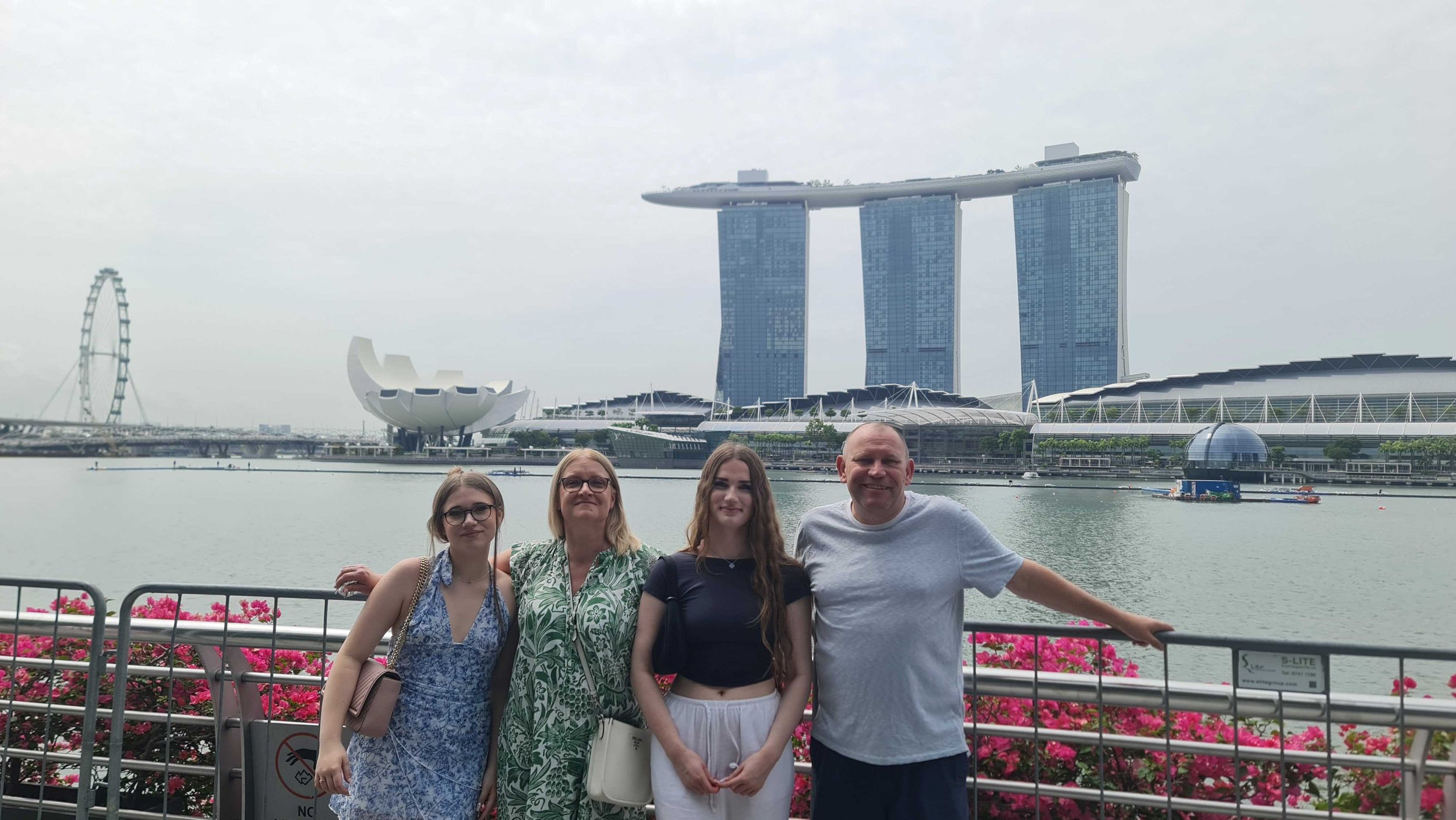
From there, the perspective shifts—literally. Boarding a traditional bumboat along the Singapore River, the city reveals its transformation in motion. Old shophouses stand side by side with sleek towers, and the contrast tells you everything you need to know about Singapore’s evolution. As the boat moves toward Marina Bay, the skyline opens up, dominated by icons like Marina Bay Sands. This part of the journey feels like a seamless blend of a Singapore river cruise and a visual timeline of the city’s growth.
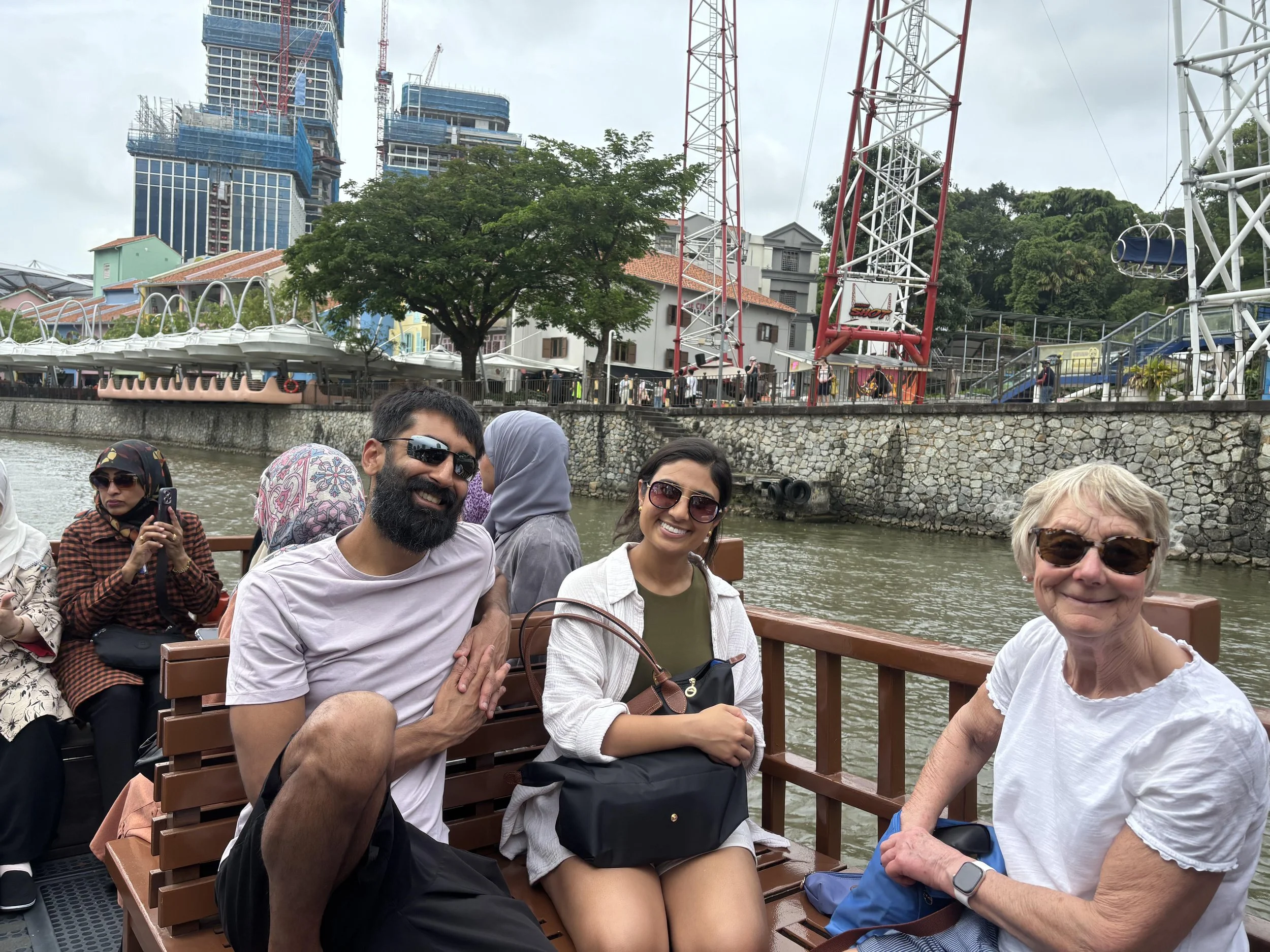
Guests enjoying the view and Singapore River cruise experience on their tour.
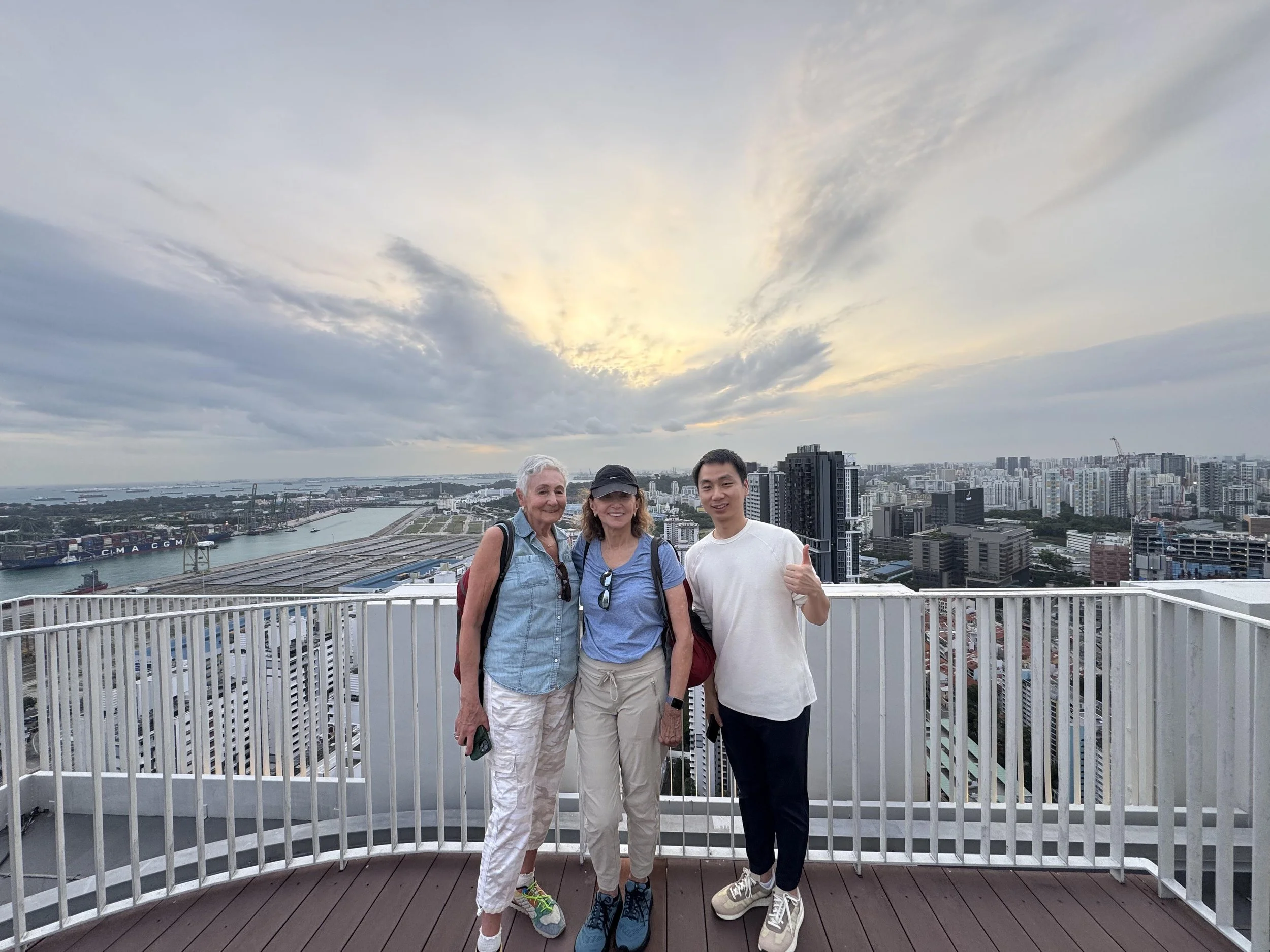
Back on land, the experience becomes more personal. Standing on the rooftop of a public housing block—something uniquely Singaporean—you get a different kind of insight. These aren’t just buildings; they’re part of a national vision shaped by Lee Kuan Yew. From up there, the city feels both vast and deeply organized, a reflection of careful planning and long-term thinking. It adds depth to what many would consider a simple Singapore city tour.
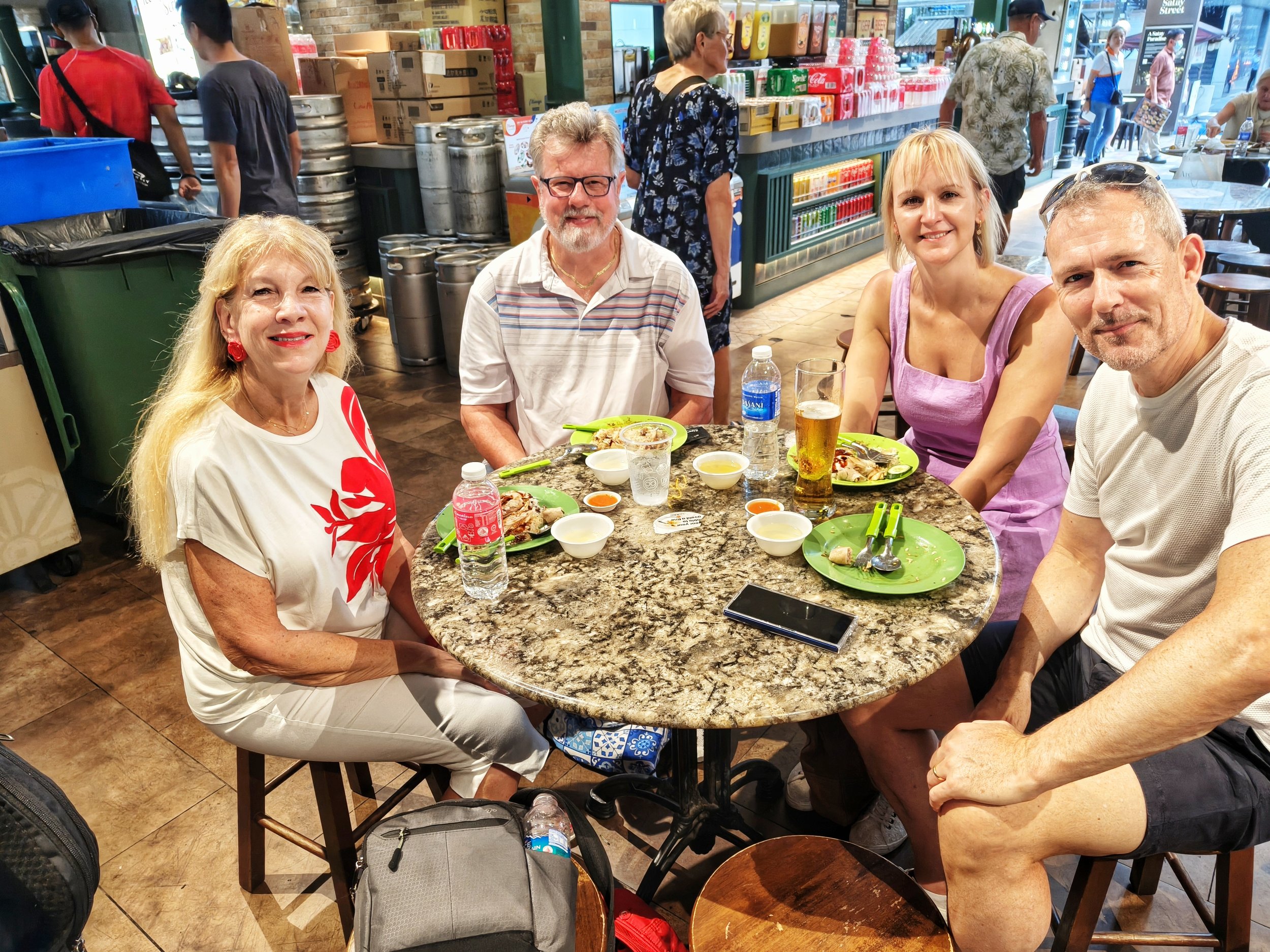
Then comes Chinatown, where the atmosphere shifts again. It’s louder, more colorful, and filled with the scent of food. At a bustling hawker centre like Maxwell Food Centre, you don’t just eat—you learn how locals eat. There’s an unspoken rhythm to it: finding a seat, knowing which stalls to trust, and embracing the simplicity of dishes like Hainanese Chicken Rice paired with fresh sugarcane juice. It’s casual, authentic, and somehow one of the most memorable parts of the day.
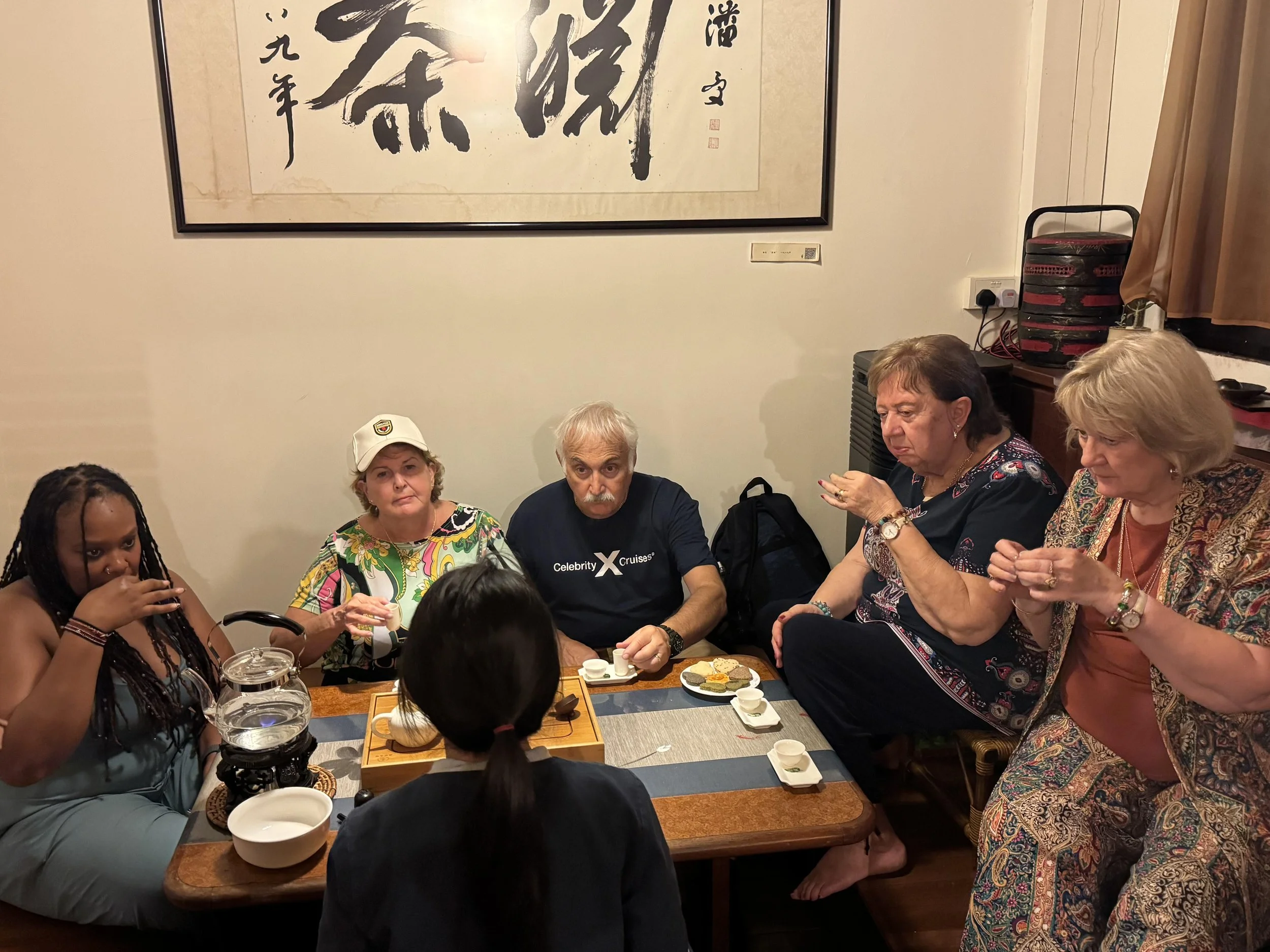
As the evening winds down, the pace softens. Inside a traditional teahouse, the noise of the city fades into the background. The tea ceremony isn’t just about drinking tea—it’s about slowing down, paying attention, and appreciating the details. Sipping a refined blend once associated with figures like Queen Elizabeth II, the experience quietly ties back to Singapore’s roots in global trade. It’s a calm and meaningful ending to what feels like a full-circle cultural tour in Singapore.
By the end of the journey, you realize something: Singapore isn’t just a modern city with an interesting past. It’s a place where history, culture, and daily life are constantly overlapping. And when experienced this way—on foot, on water, through food, and in conversation—it becomes much more than a destination.
It becomes a story you’ve actually lived through—even if just for a few hours.