
Little India vs. Chinatown: A Singapore Food Tour Comparison
Singapore packs an entire continent's worth of culture into a handful of neighborhoods, and nowhere is that more delicious than on a food tour through Little India and Chinatown. Walk between the two and you cross more than a few blocks — you cross centuries of migration, faith, and flavor. Here's how they compare, and why early October is one of the best times all year to visit both.
Two Neighborhoods, Two Histories
Little India grew from the 1800s, when Indian immigrants — many brought over as cattle traders, laborers, and later merchants — settled along Serangoon Road. Chinatown, just a short ride away, took shape around the same period as a home for Chinese immigrants working the docks and trades of colonial Singapore. Both neighborhoods started as places for communities to hold onto their language, religion, and food while building new lives far from home. That history is still the first thing you taste when you arrive.
The Food: Spice Versus Balance
Turn onto Dunlop Street in Little India and the first thing that hits you isn't a restaurant — it's the produce. Grocers like Chennai Trading & Supermart spill fruit and vegetables onto the sidewalk in bright green crates: mangoes, okra, curry leaves, banana flowers. This is where the neighborhood's food actually starts, before it ever reaches a plate. A food tour here means banana leaf rice piled with curries, crispy roti prata dipped in dhal, and murtabak stuffed with minced meat and egg — bold, layered spice, eaten with your hands.
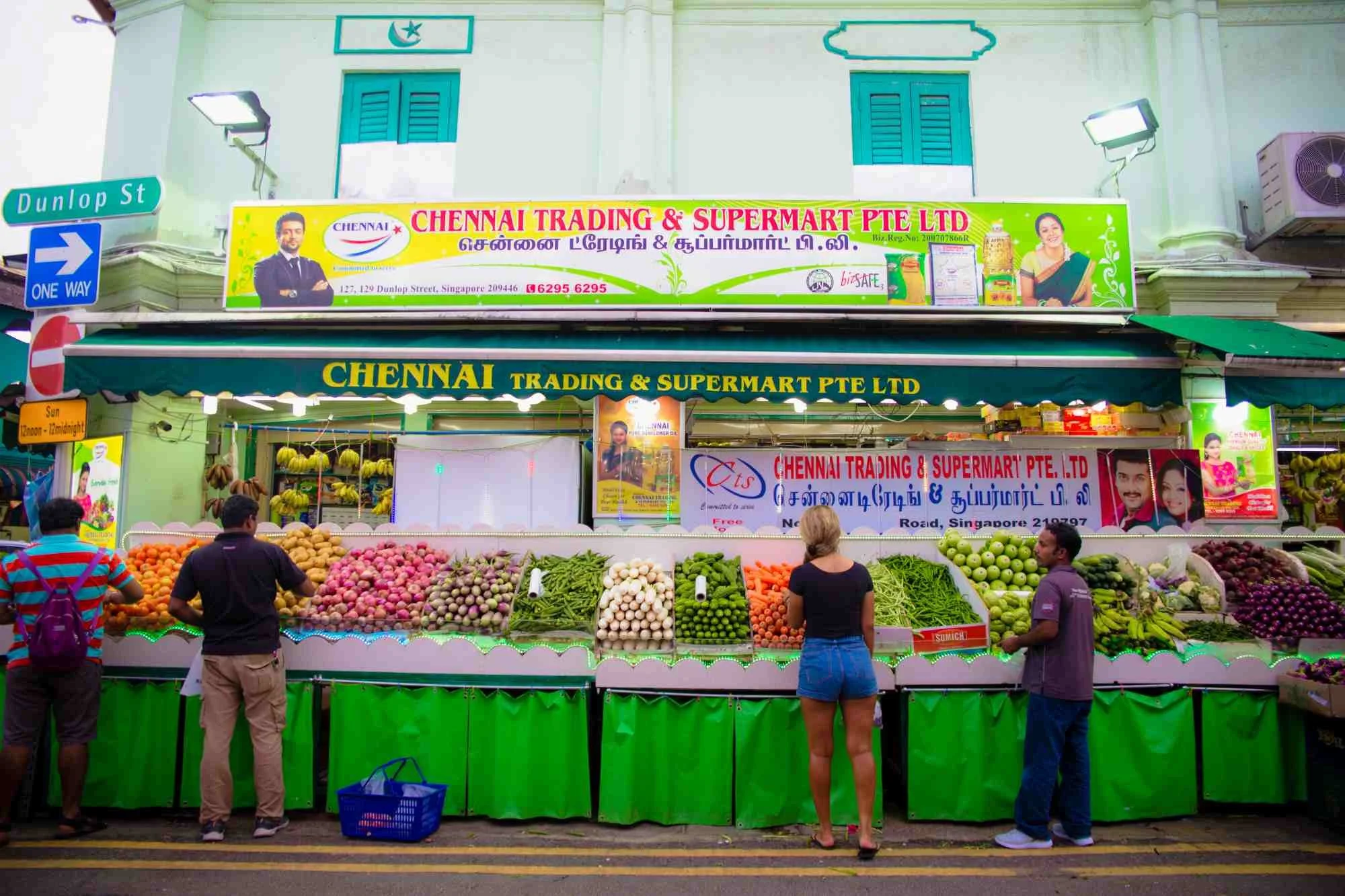
Shoppers browsing fresh produce at a Dunlop Street grocer in Little India — a slice of daily life alongside the neighborhood's food stalls and temples
Chinatown's food tour experience runs on balance rather than heat — the interplay of sweet, sour, salty, and savory. At a hawker stall in Chinatown, you might watch a vendor pour fresh sugarcane juice into a cup for a pair of visitors, a small, unhurried exchange that says more about the neighborhood than any menu could. Around that same stall: char kway teow, soft-boiled eggs with kaya toast, and bak kut teh simmered low and slow. Where Little India hits you with spice up front, Chinatown builds flavor in layers, course by course.
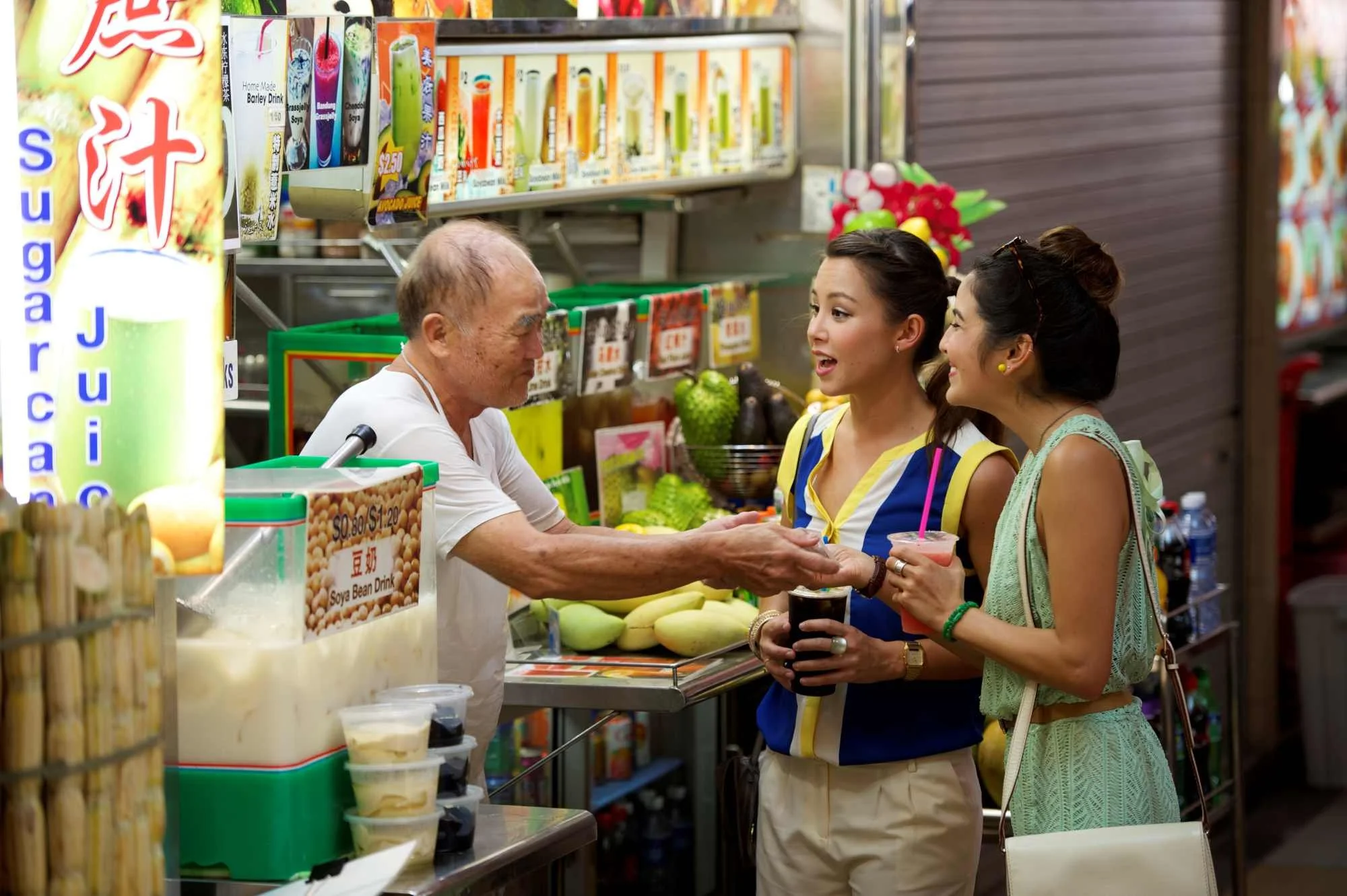
A vendor pours fresh sugarcane juice for visitors at a Chinatown hawker stall — one of the small exchanges that make a guided food tour feel personal
Visitors often assume one neighborhood will feel more "authentic" than the other, but both are equally rooted — they just come from different culinary traditions shaped by different homelands.
Sights and Sounds
In Little India, the Sri Veeramakaliamman Temple rises in bright color above the street, incense drifting out into the crowd. Shops sell gold jewelry, silk saris, and garlands of jasmine and marigold. In Chinatown, the Buddha Tooth Relic Temple anchors the district, and shophouses in muted pastels line streets hung with red lanterns. Little India feels loud and vivid; Chinatown feels layered and quietly ornate. Neither is "more Singapore" than the other — together, they are Singapore.
Why Early October Is the Time to Go
This year, the timing works out especially well. Mid-Autumn Festival falls on September 25, so by the first week of October, Chinatown will still be strung with lanterns and stocked with mooncakes in every flavor from traditional lotus paste to modern snowskin. Meanwhile, Little India will be gearing up for Navaratri, which runs October 11 to 19 this year — nine nights honoring the goddess Durga, with street decorations going up, kolam patterns appearing on doorsteps, and special festival sweets showing up in shop windows.
Visit in early October and you catch both neighborhoods at a turning point: Chinatown still glowing from one festival, Little India lighting up for the next. It's a rare window where a single food tour lets you taste two completely different celebrations back to back.
Taste It With a Guide
You can piece together your own route between the two neighborhoods, but a guided food tour means you're not guessing which stall is worth the queue or which dish to order first. Hello! Singapore Tours runs food tours through both Chinatown and Little India, led by guides who know the shopkeepers, the history behind each dish, and the best order to eat everything in — so you spend your time tasting, not searching.
If you'd rather have someone else handle the route (and the recommendations), book a food tour with Hello! Singapore Tours and let a local guide take you through it.